MINDFULNESS
Developing mindfulness, emotional balance, and self-awareness
Kindergarten
1 period per week
Primary
1 period per week
Mindfulness supports children's emotional, cognitive, and social development. It helps children better understand what they are feeling, recognize their internal states, and respond to them in a more appropriate way. By cultivating a peaceful relationship with their emotions and thoughts, children develop an inner security that promotes engagement, confidence, and a willingness to learn. At Eden, this approach is fully in line with an educational vision that considers children in all their dimensions.
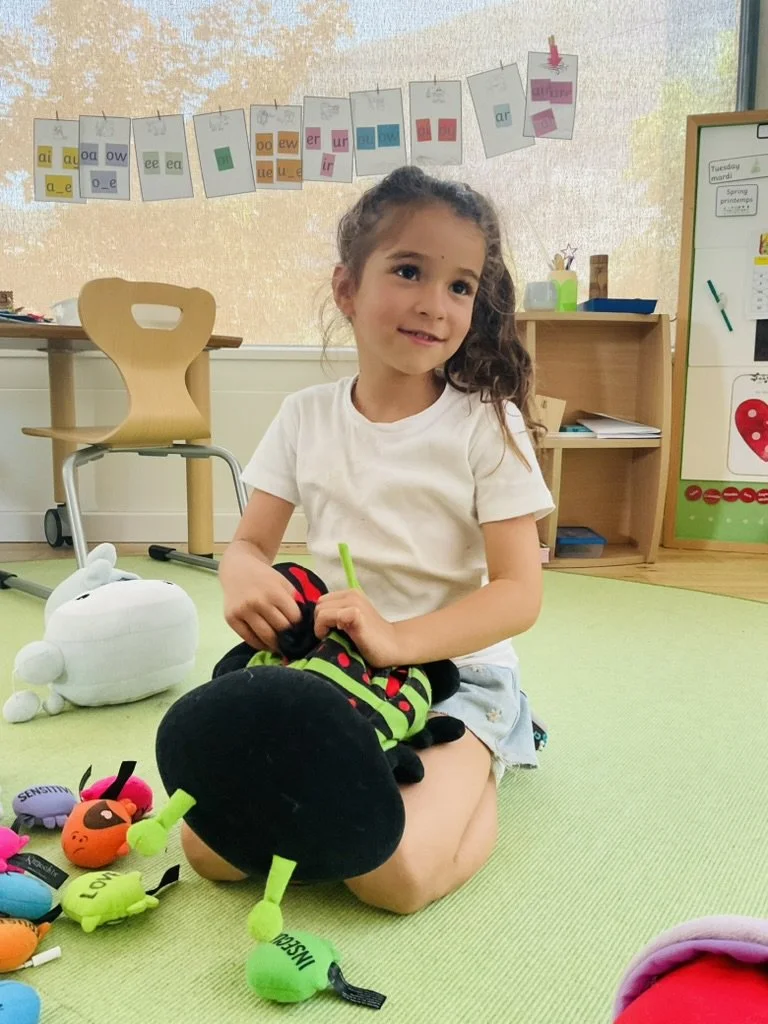
In kindergarten, mindfulness takes on a concrete and accessible form through Kimochis®, educational stuffed animals that are presented as real characters. Through role-playing, children learn to recognize, name, and accept their emotions. They gradually identify what they are feeling, put words to their emotional states, and understand that each emotion has a function. This approach lays the foundation for secure emotional regulation and attentive listening to oneself and others.
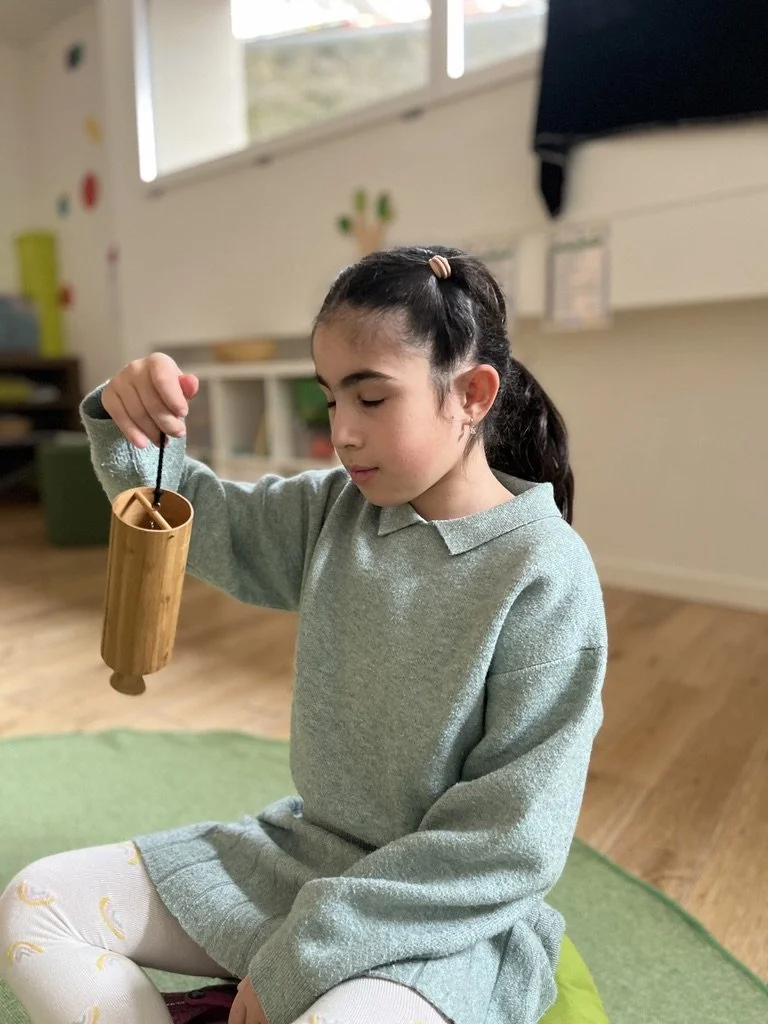
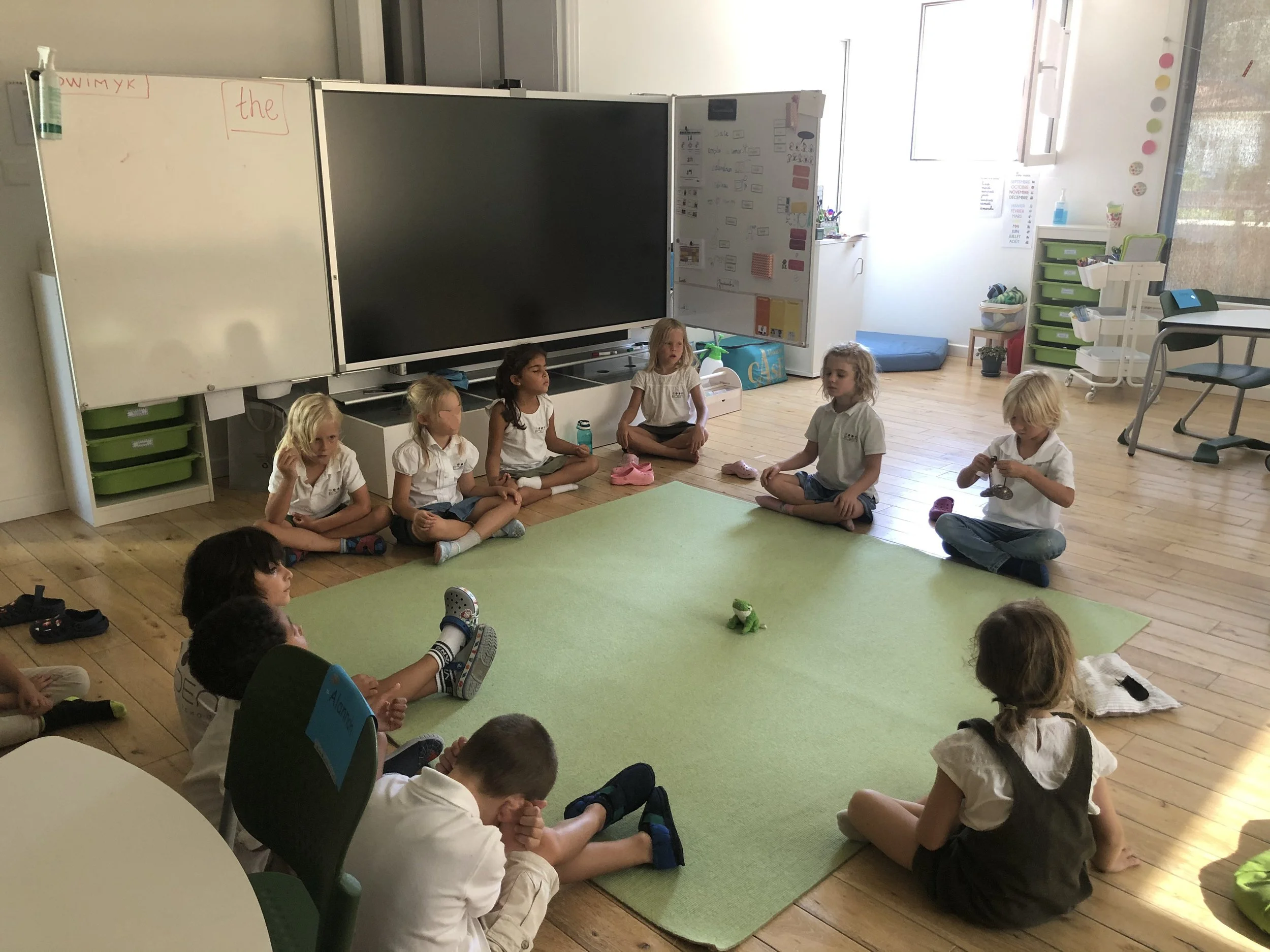
In elementary school, mindfulness is based on two complementary approaches: the Brain Ball® method and the Eline Snel® method. Brain Ball® uses coordinated movement to support attention, coordination, cooperation, and executive functions. Mindfulness develops conscious and compassionate attention to breathing, sensations, and emotions, promoting refocusing and inner balance.
These lessons are supported by practices derived from positive discipline, which are integrated into everyday classroom life. They offer children a reassuring framework and concrete tools to regulate their emotions, manage relationships, and adopt behaviors that are respectful of themselves and others.
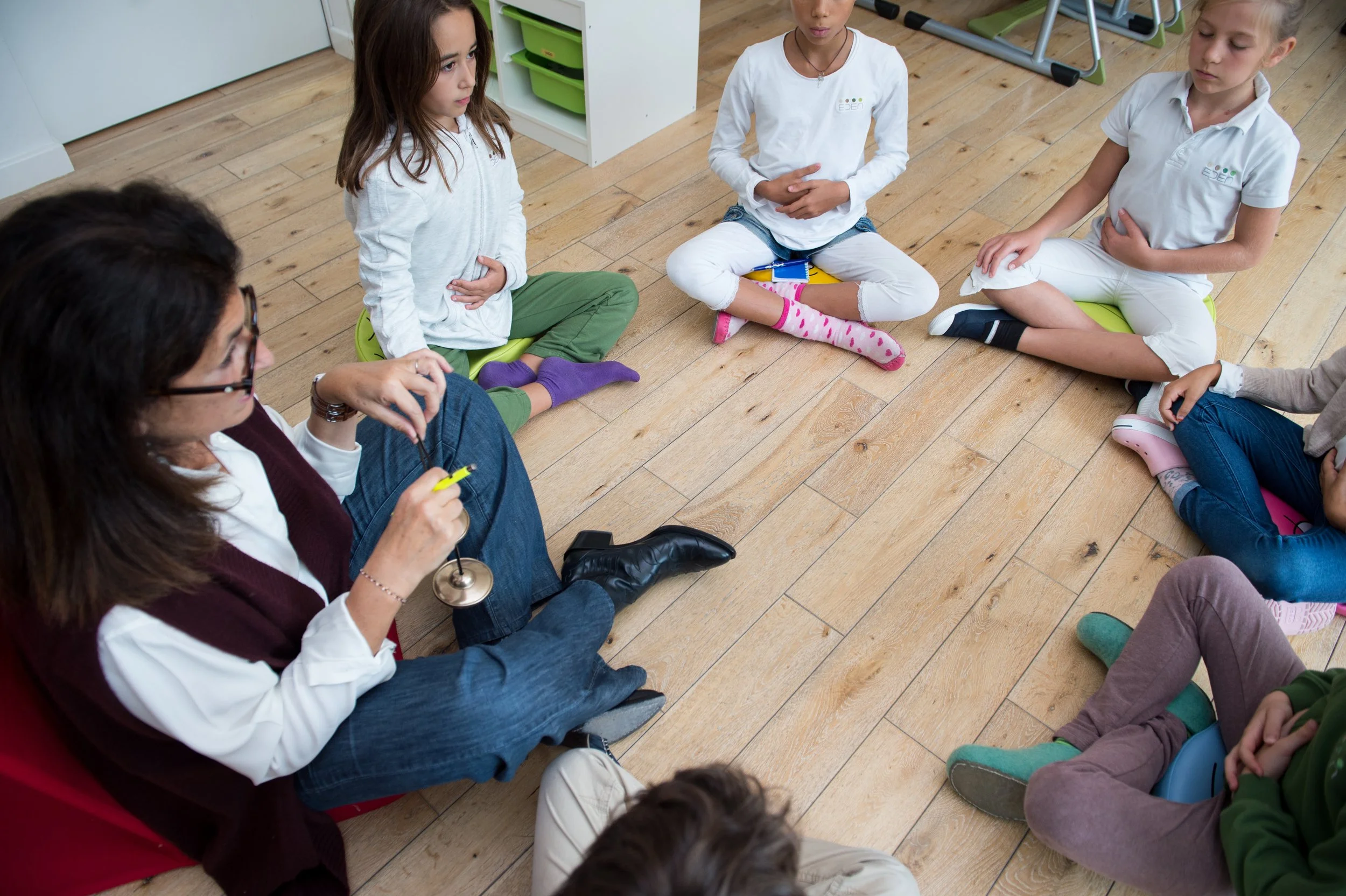
These courses reinforce essential skills such as emotional regulation, empathy, listening, and cooperation. They also support the development of attention, concentration, and perseverance. By learning to refocus and recognize their emotions, children gain autonomy, confidence, and adaptability. In this way, they build a solid foundation for learning, social relationships, and long-term well-being.